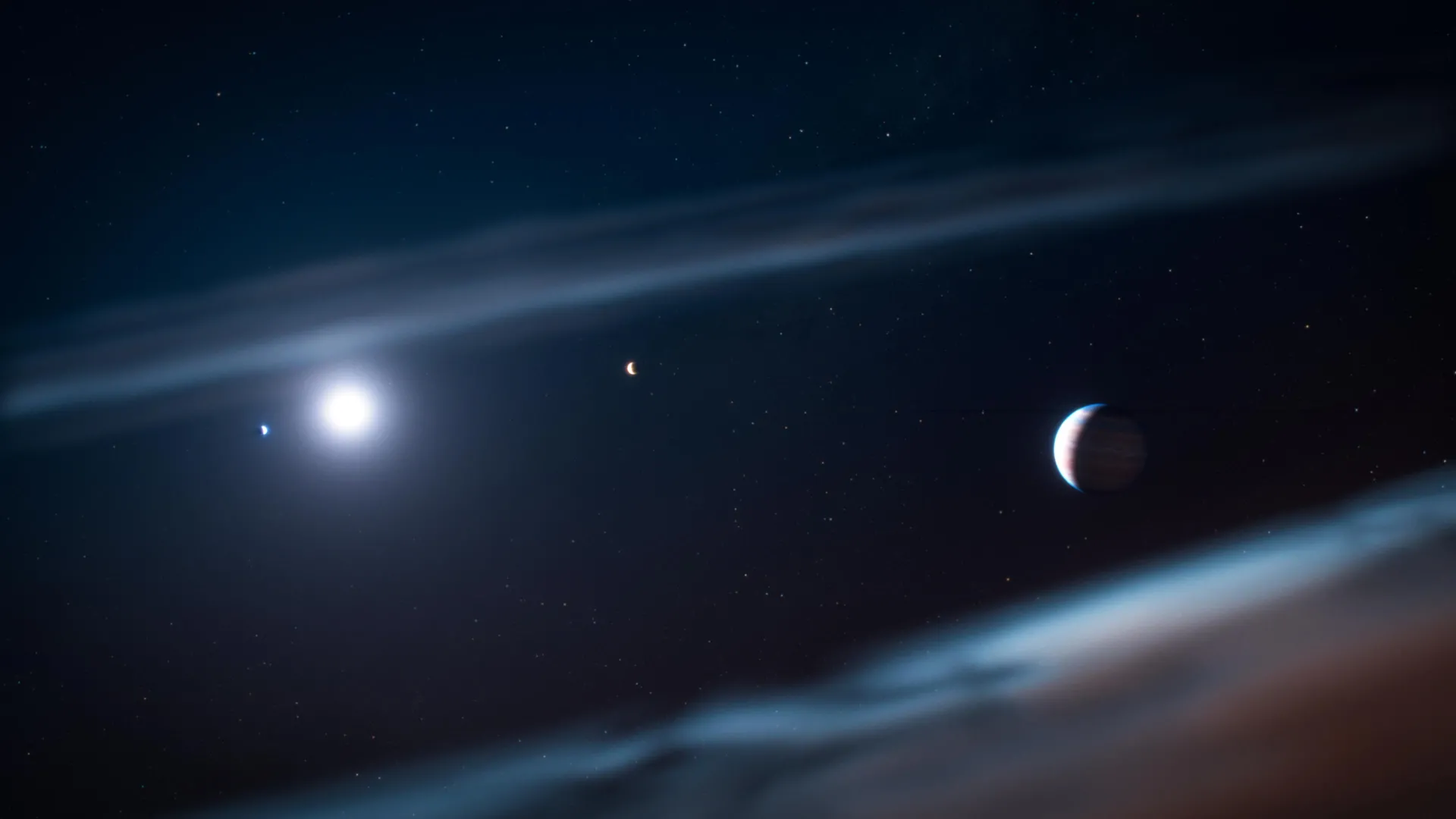
NASA’s James Webb Space Telescope has discovered a giant planet, designated Beta Pictoris d, within the well-known Beta Pictoris planetary system. The planet was previously obscured by a surrounding disk of cosmic dust.
The discovery, made possible through atmospheric traces of carbon monoxide, water vapor, and methane detected by Webb, marks a significant advancement in exoplanet detection methods. Researchers were able to identify the planet despite its concealment thanks to the telescope’s advanced capabilities. The Beta Pictoris system is one of the most closely studied planetary systems by astronomers.
The finding showcases a promising new method for locating elusive exoplanets that might otherwise remain hidden from view. By analyzing atmospheric compositions, scientists can potentially reveal planets obscured by dust or other celestial phenomena. NASA states that Webb revealed Beta Pictoris d through these atmospheric traces.
We don't rate truth. We strip the spin and show you which perspectives covered the story. You decide.
Read the original coverage
💬 Comments
📜 Comment Policy