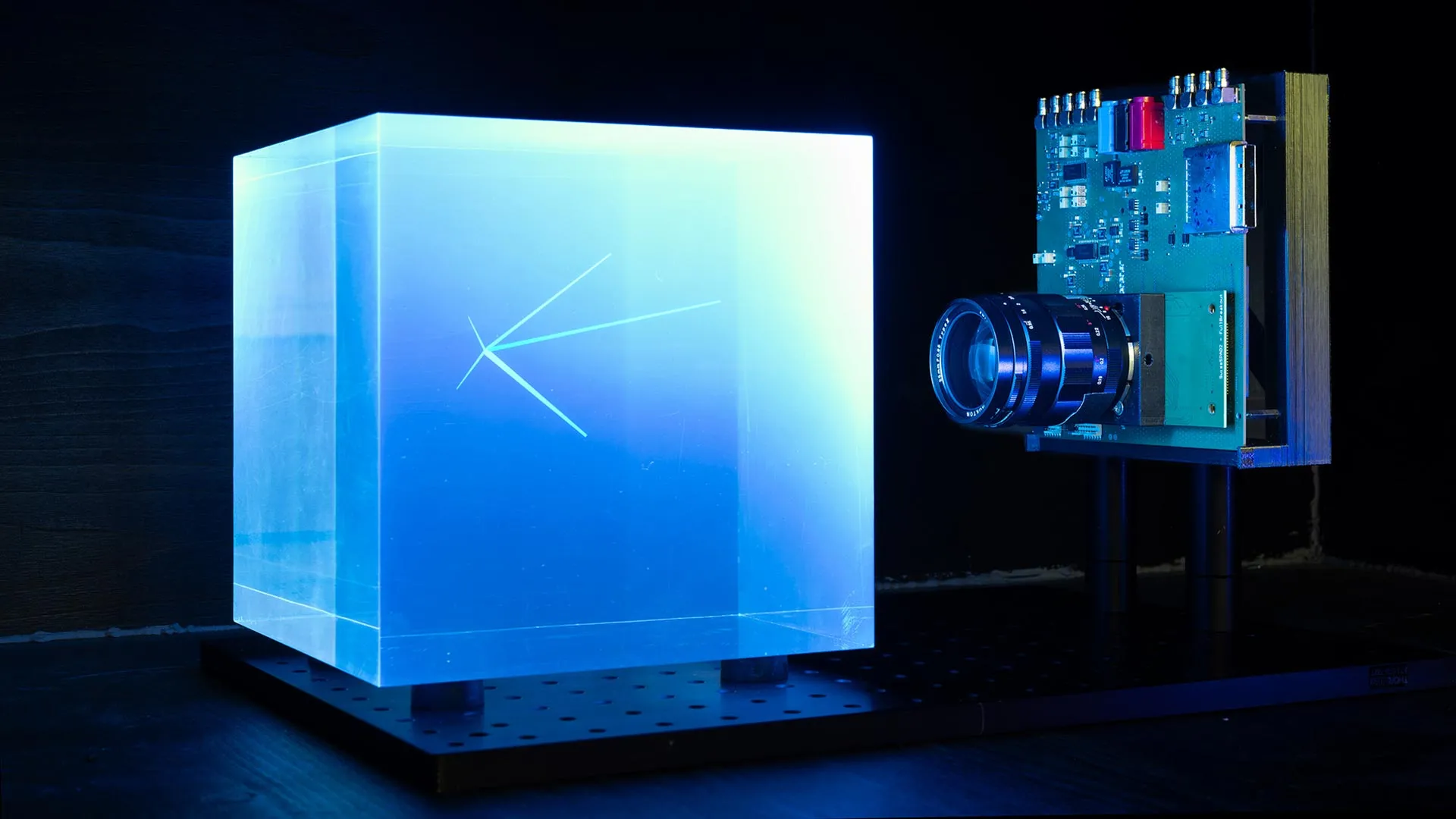
Scientists have developed a new particle detector, called PLATON, that could revolutionize how these particles are observed. The device utilizes light-field camera technology, sensitive photon sensors, and artificial intelligence to reconstruct the paths of particles in three dimensions.
The current method for detecting these particles relies on millions of individual components. However, PLATON aims to replace this complex system with a single block of light-producing material. This simplification is expected to make detectors easier to scale up for larger experiments. Researchers state that simulations suggest PLATON could perform as well as—or even better than—existing detectors.
The technology behind PLATON combines a light-field camera, highly sensitive photon sensors, and AI algorithms. These components work together to reconstruct particle paths with speed and detail in 3D. The development team believes this approach offers significant advantages over traditional detection methods.
Beyond fundamental research, the scientists suggest that this new technology could also improve medical imaging techniques like Positron Emission Tomography (PET) scans, potentially leading to sharper and more detailed images.
We don't rate truth. We strip the spin and show you which perspectives covered the story. You decide.
Read the original coverage
💬 Comments
📜 Comment Policy