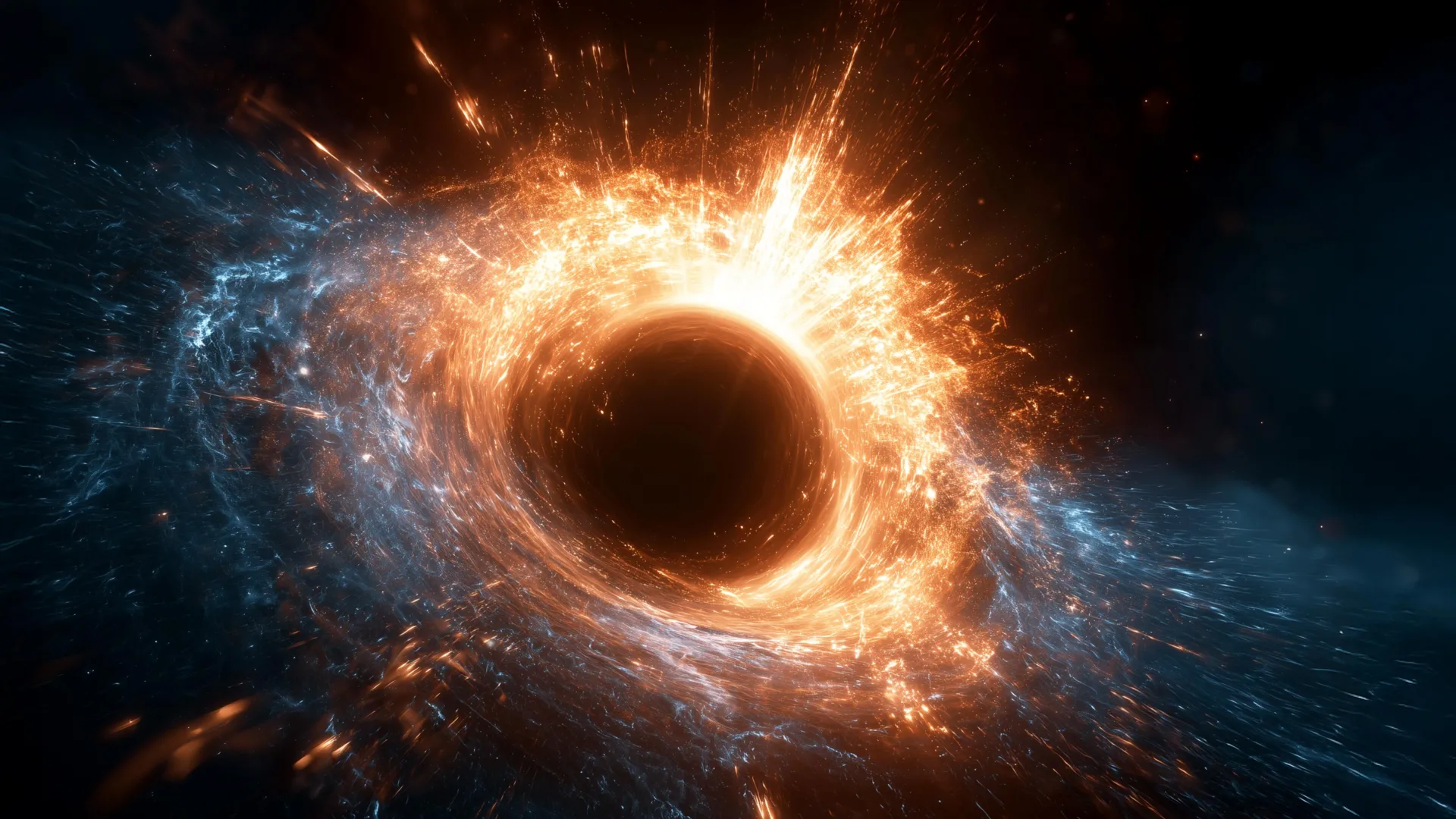
NASA’s James Webb Space Telescope (JWST) has provided unusually detailed images of a supermassive black hole actively consuming gas at the center of galaxy NGC 4696. The observations reveal a vast filament of material funneling into an 800-light-year-wide spinning disk surrounding the black hole, where gas moves at speeds up to 600 kilometers per second.
The JWST captured images of gas feeding the supermassive black hole located in NGC 4696. This galaxy is the central member of the Centaurus Cluster, a large collection of galaxies approximately 57 million light-years from Earth. The telescope’s advanced capabilities allowed scientists to observe details previously unseen regarding how material approaches and enters the black hole's accretion disk.
The findings suggest a potential mechanism for how black holes sustain themselves: recycling their own fuel. According to the source, the process involves jets emanating from the black hole heating gas, which then cools and is subsequently drawn back in. This cycle allows the black hole to continue feeding and growing over time. The observations provide insight into the dynamics of active galactic nuclei and the behavior of supermassive black holes.
We don't rate truth. We strip the spin and show you which perspectives covered the story. You decide.
Read the original coverage
💬 Comments
📜 Comment Policy