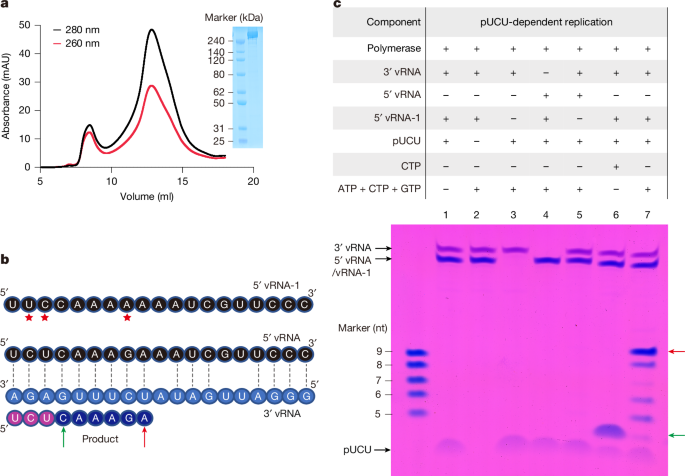
Structural studies of the Crimean–Congo haemorrhagic fever virus (CCHFV) polymerase have been conducted, revealing insights into how the virus replicates its RNA and identifying potential targets for antiviral drug development. The research, published online on July 22, 2026, in *Nature*, details the structural basis of CCHFV RNA synthesis.
The study focused on the CCHFV polymerase, a crucial enzyme responsible for replicating the viral RNA genome. Researchers determined the structure of this polymerase, providing a detailed understanding of its function and how it operates at a molecular level. This knowledge is vital because it highlights specific locations within the polymerase that could be targeted by antiviral medications.
The findings indicate possibilities for designing two main types of antivirals: nucleoside antivirals and non-nucleoside antivirals. Nucleoside antivirals mimic the building blocks of RNA, interfering with viral replication, while non-nucleoside antivirals bind to different sites on the polymerase, disrupting its function. The structural data allows scientists to pinpoint “druggable sites” – areas where these antiviral compounds could effectively bind and inhibit the enzyme.
The research was published in *Nature* with a DOI of 10.1038/s41586-026-10701-6.
We don't rate truth. We strip the spin and show you which perspectives covered the story. You decide.
Read the original coverage
💬 Comments
📜 Comment Policy