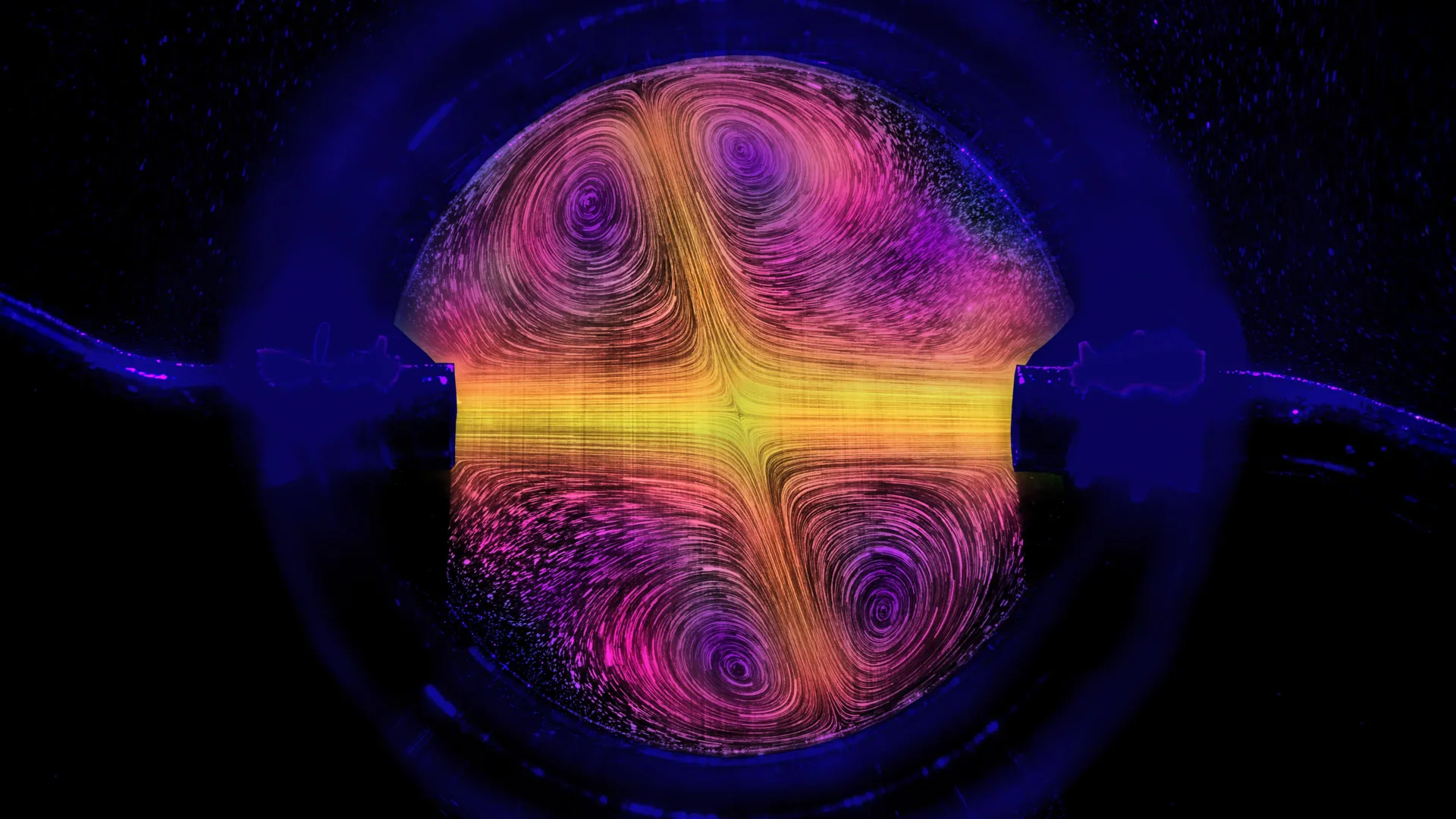
A team of mathematicians has resolved a long-standing physics puzzle concerning the rotation of lawn sprinklers, using unconventional experimental tools. The research clarifies the driving force behind sprinkler movement and could inform the design of more efficient fluid-powered machinery.
A decades-old mystery surrounding the behavior of rotating lawn sprinklers – famously posed by physicist Richard Feynman – has finally been solved by a team of mathematicians. Their experiments, detailed recently, demonstrated that the rotation of both normal and reverse sprinklers is driven by the momentum of flowing water itself, rather than external forces or previously theorized mechanisms.
The researchers employed what they playfully termed “silly sprinklers” in their investigations. These custom-built devices allowed for precise observation and measurement of the forces at play. The results definitively show that it’s not the outside water flow, as some had suggested, but the momentum of the water *within* the sprinkler system that causes rotation.
The findings provide a clear answer to Feynman’s famous sprinkler problem, which challenged scientists to explain why sprinklers rotate despite receiving an equal amount of fluid from all directions. Beyond resolving this theoretical puzzle, the research could have practical applications. Scientists believe it may help engineers design more efficient fluid-powered machines by providing a better understanding of how momentum influences fluid dynamics.
We don't rate truth. We strip the spin and show you which perspectives covered the story. You decide.
Read the original coverage
💬 Comments
📜 Comment Policy