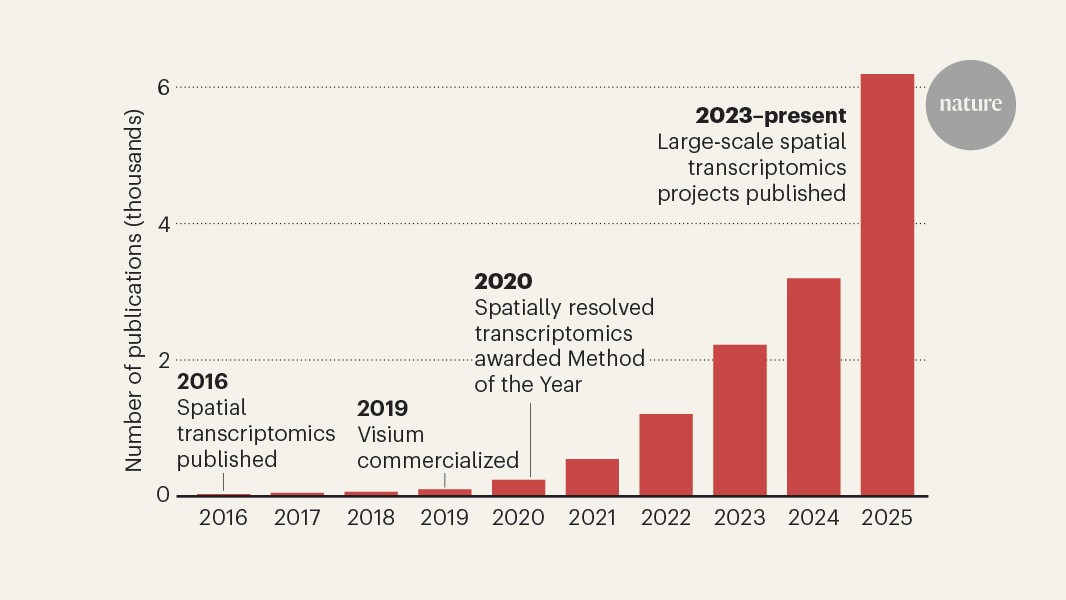
Spatially resolved transcriptomic technologies have significantly advanced the understanding of both development and disease over the past decade. This progress is fueled by a collaborative cycle between academic research institutions and industry partners.
The field of spatially resolved transcriptomics has seen considerable growth, enhancing scientists’ ability to study gene expression within tissues. According to *Nature*, published online on July 21, 2026, these technologies are improving comprehension of complex biological processes related to development and the onset of disease.
The advancement isn't occurring in isolation; it is characterized by a “feedback loop involving academia and industry.” This collaborative dynamic suggests that research findings from universities are being translated into practical applications by companies, while industry challenges and innovations inform further academic investigation. The article’s doi is 10.1038/d41586-026-02212-1.
We don't rate truth. We strip the spin and show you which perspectives covered the story. You decide.
Read the original coverage
💬 Comments
📜 Comment Policy