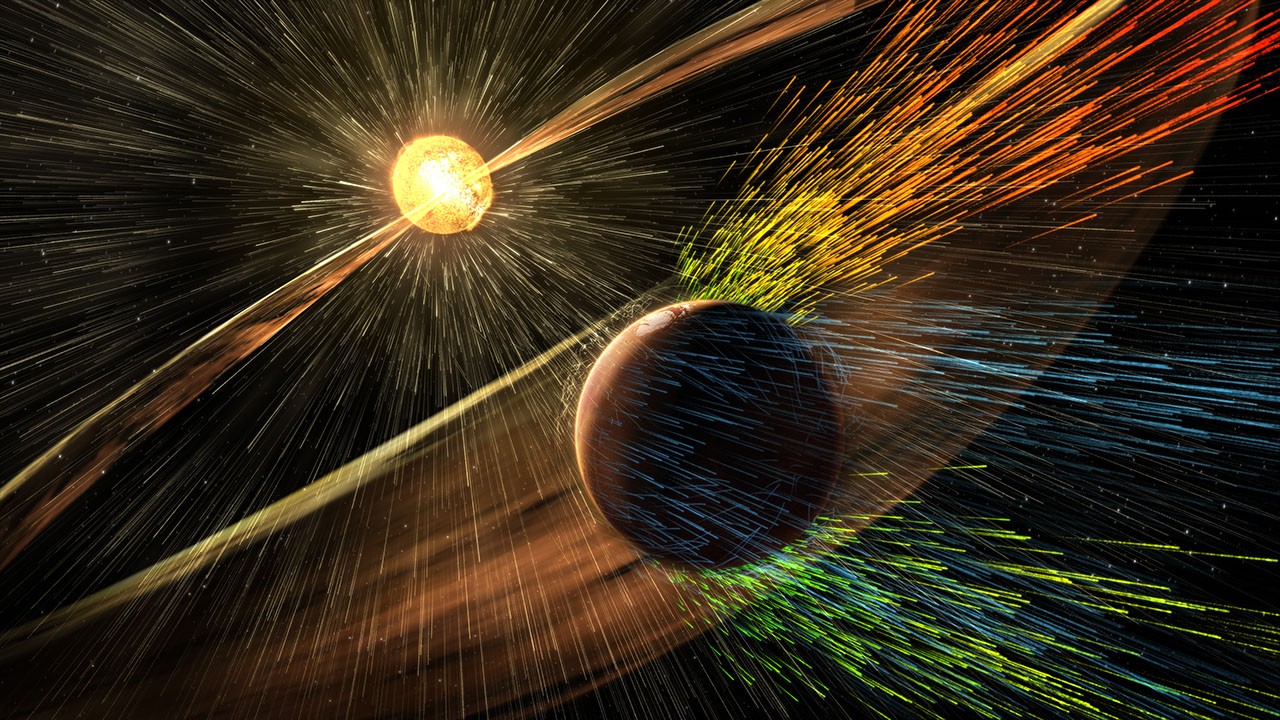
Scientists working with NASA’s Mars Atmosphere and Volatile Evolution (MAVEN) mission have gained new insights into the formation of auroras on Mars. Results published Thursday in *Nature Communications* reveal that certain Martian auroras are created through a similar process to those seen on Earth.
The MAVEN mission, according to NASA, has helped uncover a key piece of understanding regarding these auroras. The research shows the same mechanism responsible for circulating and launching charged particles into Earth’s atmosphere is also occurring at Mars. This discovery explains how some Martian auroras are formed.
The findings, published in *Nature Communications*, detail this newly understood process. While Earth's auroras are typically driven by solar wind interacting with the planet’s magnetic field, these specific Martian auroras appear to be generated through a different mechanism involving the circulation of charged particles within the Martian atmosphere itself. This is significant because Mars lacks a global magnetic field like Earth’s.
The research team believes this understanding will contribute to a more complete picture of how Mars loses its atmosphere to space. The MAVEN mission, launched in 2013, is specifically designed to investigate the upper atmosphere of Mars and its interaction with the solar wind, ultimately aiming to understand why Mars has lost much of its original atmosphere over billions of years.
We don't rate truth. We strip the spin and show you which perspectives covered the story. You decide.
Read the original coverage
💬 Comments
📜 Comment Policy