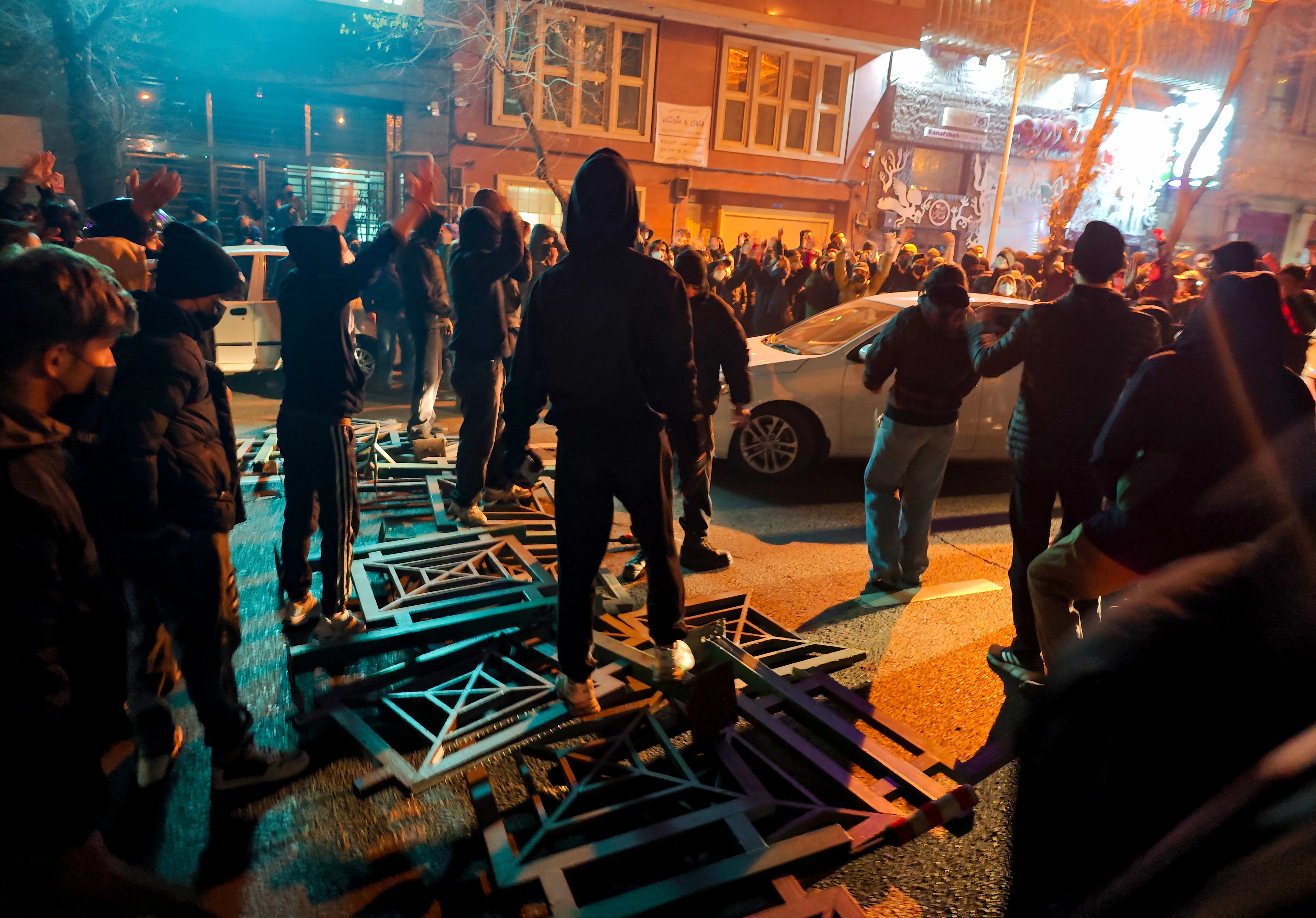
Iran on Tuesday carried out the executions of two men convicted of killing four police officers during protests that began in January. State media reported the executions, identifying the men as Mohammad Mehdi Karami and Seyyed Mohammad Hosseini. No right-leaning sources are present in this reporting.
The executions follow a pattern of capital punishment within Iran; the country is second only to China in the number of executions carried out annually. While details surrounding the specific circumstances of the killings remain limited, these executions occur against a backdrop of ongoing unrest and government response to widespread protests. The January demonstrations were sparked by economic grievances and political discontent.
The state media report does not detail the specifics of the trial or legal proceedings leading to the convictions and subsequent executions. This lack of transparency raises questions about due process and fair trial standards, concerns frequently voiced by international human rights organizations regarding Iran’s judicial system. The timing of these executions may also be viewed as a signal from the Iranian government intended to deter further dissent.
The broader context reveals a concerning trend in Iran's use of capital punishment, particularly in cases involving political or social unrest. While state media presents this as a matter of upholding law and order, critics argue it represents an attempt to suppress opposition and instill fear among the population. The executions leave unresolved questions regarding the extent to which these convictions were obtained through fair legal processes and whether they align with international human rights standards.
We don't rate truth. We strip the spin and show you which perspectives covered the story. You decide.
Read the original coverage
💬 Comments
📜 Comment Policy