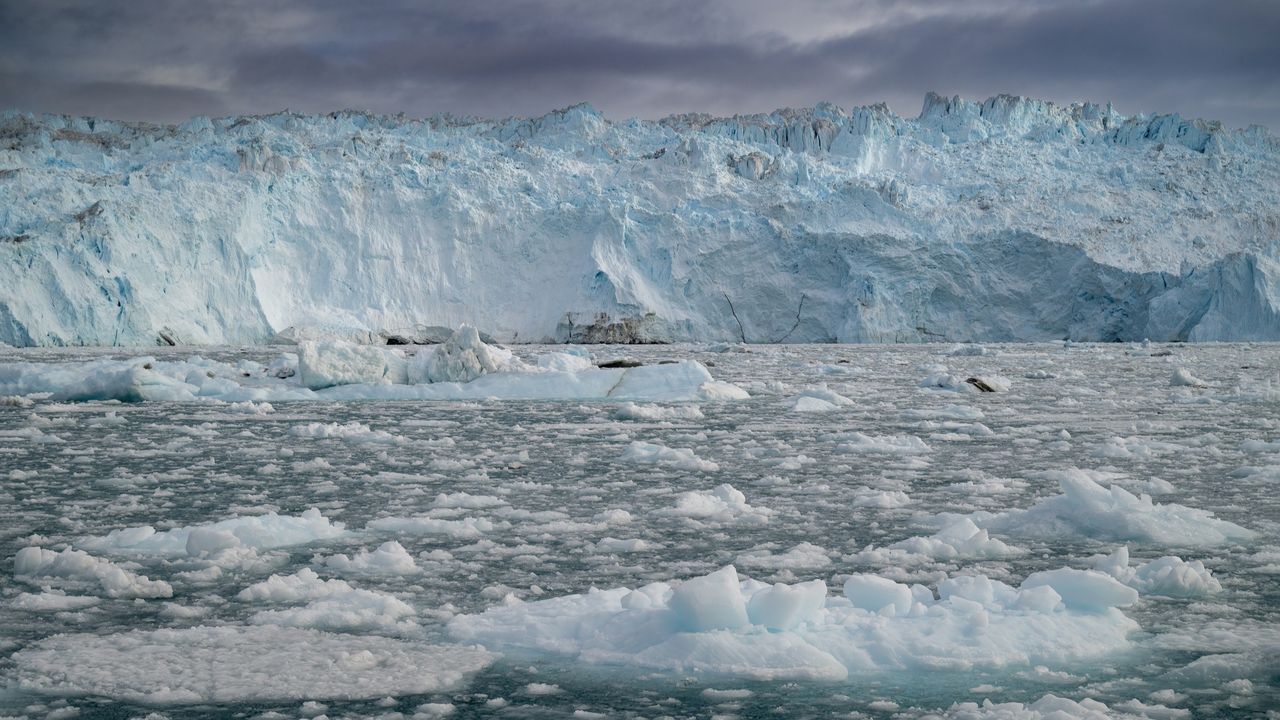
New modeling indicates that meltwater from the Greenland ice sheet is significantly weakening key Atlantic currents, specifically the Atlantic Meridional Overturning Circulation (AMOC). However, researchers believe a complete and irreversible collapse of these currents is unlikely.
The study, as reported by Live Science, focuses on the impact of increasing freshwater runoff from Greenland due to accelerating ice melt. This influx of less dense water disrupts the AMOC, which plays a crucial role in regulating global climate patterns by transporting warm surface water northward and returning cold deep water southward. The weakening of this circulation could have significant consequences for weather systems across Europe and North America.
The modeling suggests that while the AMOC will experience a “strong weakening,” it is not projected to shut down entirely. Researchers determined this through advanced simulations analyzing the effects of Greenland’s meltwater on ocean salinity and density. The source does not specify *when* these changes are expected, only that they are linked to ongoing ice sheet melting.
The research team's findings indicate a substantial influence from Greenland’s runoff but stop short of predicting catastrophic failure. According to Live Science, the study concludes the meltwater will drive a “strong weakening, but not a shutdown” of these vital Atlantic currents.
We don't rate truth. We strip the spin and show you which perspectives covered the story. You decide.
Read the original coverage
💬 Comments
📜 Comment Policy